Friday, March 22, 2013

“What does ANAJURE exist for?” The Marco Feliciano case


“What does ANAJURE exist for?” The Marco Feliciano case

Is the defense of civil liberties above religious differences? Or is it not?

By Julio Severo
Rep. Marco Feliciano has been under heavy fire from gay supremacists in Brazil, because he was appointed in 5 March to head the Human Rights Congressional Committee (HRCC) in the Brazilian House of Representatives.
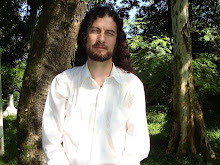
Marco Feliciano
They are furious not only at his stances on homosexuality and abortion, but also because HRCC had always been headed by the ruling socialist Workers’ Party and other socialists, who operated this congressional committee to approve the allocation of millions of taxpayer money to homosexualist projects.
Under this socialist leadership, HRCC also discussed ways to criminalize criticism of homosexuality. Abortion and homosexual sex were their top priority concern.
Gay supremacists were satisfied to see their demands served by hardline socialists.
Then came Marco Feliciano, an Assemblies of God minister. Feliciano has not been theologically trained and has a hard time to express his views in philosophical terms. Nevertheless, he has been clear about values. His simple Pentecostal background has led him to take a firm stand against abortion and homosexuality.
So he has been pressed by all sides to resign: gay supremacists, liberal politicians, abortion groups, liberal media and… liberal Protestants.
A massive group of these Protestants, comprised also by gay Protestant militants, is petitioning the Brazilian government and Congress to remove Feliciano from the HRCC presidency. The House of Representatives president officially wants Feliciano to step down. The president of his party, under such pressure, wants him to resign as well.

Silas Malafaia, renowned Brazilian Pentecostal Televangelist, Supports Feliciano

A number of pro-family Christians, including Catholics, are supporting Marco Feliciano.
The Portuguese version of The Christian Post reported yesterday Silas Malafaia and Julio Severo as the main evangelical voices in Brazil asking Feliciano not to resign. Malafaia is also an Assemblies of God minister and has a massive audience through his weekly religious TV shows.
Silas Malafaia
In the The Christian Post article, Malafaia said that the attacks against Feliciano are coming from leftists.
He has been outspoken about abortion and homosexuality. Like Feliciano, he is not afraid to call abortion a murder and homosexuality a sin. But unlike Feliciano, he is much more articulate.
Yet, both Malafaia and I understand that this is not the proper time for us to judge Feliciano for his lack of theological training and philosophical gifts. Therefore, on account of his like outspoken stance on defense of family values, Feliciano needs support, not criticism or condemnation.

ANAJURE

So it is a surprise that ANAJURE issued a public message, on March 20, saying the presence of Feliciano in HRCC “is going to divide, even more, the Evangelical Church” in Brazil.
ANAJURE is a recently born group of Brazilian Protestant attorneys whose purported mission is to defend fundamental civil liberties, especially of Christians.
But its public message, signed by its president, Uziel Santana, has no such defense for the fundamental civil liberties of Feliciano. On the contrary, it accuses the Assemblies of God minister of “fomenting a holy war for his intolerant actions against intolerant” individuals and groups.
The message also questions the personal motivations of the Pentecostal minister, by saying “All of this because personal projects are above the values of the Truth of the Gospel of Christ.”
Reportedly, ANAJURE has had its first defection yesterday, because one of its directors strongly disagreed with the message against Feliciano.
From a Christian group self-appointed to defend fundamental civil liberties, we Brazilians should expect such a defense, regardless the doctrinal differences of the Christian victim. But this is a very hard test for ANAJURE, whose Advisory Council is headed by Rev. Augustus Nicodemus Lopes.

A Gay Activist in a Presbyterian University

Lopes is the chancellor of the Mackenzie Presbyterian University in São Paulo. He has several theological essays against Pentecostal and charismatic movements. Some of his articles are available, in Portuguese, in the website of his university.
On February 28, his university hosted a debate with Jean Wyllys, a member of the Brazilian House of Representatives. Wyllys is also a radical gay militant, working very hard in HRCC to advance the gay agenda.
To debate the gay activist, Lopes invited one of his friends in ANAJURE. But the students in the Presbyterian university booed the representative of ANAJURE, and praised Wyllys.
In the end, Lopes denied that he had sponsored the event, but the official university paper confirms that the debate was held in partnership with the university chancellor office.
This is not the only strange case involving its chancellor. In 2010 he had removed from the university website a Presbyterian manifesto against the gay agenda, because gay activists demanded it. He gave way. But he has never removed his several articles and manifestos against Pentecostals and charismatics.
My exposé of the inconsistent partnership, and the shameful fact that a gay activist was given an opportunity to defend his perversions in a Protestant university, resounded throughout Brazil. Major Protestant news websites published or mentioned my article.

Censorship

GospelPrime, GospelMais, Portal Fé em Jesus (Faith in Jesus’ Portal) and other Brazilian websites were contacted by ANAJURE, which asked them to remove my article and, in its place, publish ANAJURE articles.
One of the editors, who was under ANAJURE pressure, told me, “Sincerely, I do not know what ANAJURE exists for.”
GospelPrime, GospelMais and others gave in. Yet, Portal Fé em Jesus scolded ANAJURE for its aggression against free speech — in this case, my free speech.
The fact is, if ANAJURE had scolded Lopes for allowing a gay activist in his university, it would not need to ask major Protestant websites in Brazil to censor my fundamental civil liberties to denounce Lopes’ behavior.
Yet, even under duress, my article has had a significant repercussion in Brazil. The Facebook page of Silas Malafaia has spread it to its 168,000 followers.
What about ANAJURE and its purported mission to defend fundamental civil liberties? It is facing a hard time to do it in the case of Marco Feliciano, because its president thinks it is necessary to judge his character and motivations, but it is unable to do it in the case of one of its own directors.
And if you expose him for allowing a gay activist in his Protestant university or for him giving way to gay militants demanding the removal from his university of a Christian manifesto against the gay agenda, ANAJURE shows its muscle to defend cowardice and censor a Christian message against it.
ANAJURE is free to defend and attack anyone it wishes.
Even disagreeing with him, I will support Marco Feliciano for his courage, and I pray that he may not give in to cowards who want him to copy their cowardice.
Recommended Reading:

Tuesday, March 05, 2013

Gay militant Jean Wyllys at Brazilian Presbyterian University


Gay militant Jean Wyllys at Brazilian Presbyterian University

Has Mackenzie Presbyterian University given in to politically correct trends?

By Julio Severo
In its debate entitled “Sexual Diversity and Religious Freedom: A Possible Marriage?” on February 28, 2013, Mackenzie Presbyterian University in Brazil, in partnership with its chancellery, invited congressman Jean Wyllys, a gay supremacist, to address sexual diversity.
In its presentation featuring Wyllys, the university said of him: “A militant for civil freedoms, he worked in the base ecclesial communities in the Catholic Church. Partner in LGBT, black and women movements. He is involved in activism to fight homophobia, intolerance and religious fundamentalisms.”
To avoid a 100% homosexualist debate, Chancellor Augustus Nicodemus Lopes also invited Dr. Guilherme Zanina Schelb, member of the Advisory Council of ANAJURE, of which Lopes himself is the president of the Council.
In the presentation featuring Schelb as a federal prosecutor, Mackenzie stressed that this member of ANAJURE became internationally famous as a coordinator of some major investigations, including one designated “Araguaia Guerrilla.” This investigation, according to the Brazilian Senate, was to answer the requests of relatives of the 68 communist guerrilla combatants who died in battles against Brazilian soldiers in Araguaia, in the North of Brazil in the early 1970s. Those criminals fought against the Brazilian government to establish a communist dictatorship in Brazil.
As if this were not sufficiently sinister, Schelb has been accused of trying to enrich himself with his research, an attitude conflicting with Christian ethics, particularly when profits are obtained in whitewashing outright communist criminals.
Despite all this, he is known as “moderate,” whatever this means.
Until now, Mackenzie had not made available the contents of the speeches of Wyllys or Schelb, but a student of the Presbyterian university, who attended the debate, expressed openly that she loved the speech of the gay supremacist, saying:
(Twitter) From a Mackenzie student to Jean Wyllys: “I am of Mackenzie e I just came from the debate! I am IMPRESSED by your ability to debate and your intelligence.”
One cannot say, however, that Mackenzie was the first Protestant institution in Brazil to invite a gay activist for a debate on sexual diversity. That dubious “honor” belongs to the Higher School of Theology (HST), which held an event in 2006 where the most famous participant was Luiz Mott, leader of the Brazilian gay movement accused of defending pedophilia. HST belongs to the Evangelical Church of the Lutheran Confession in Brazil.
What we can expect next after Luiz Mott in HST and Jean Wyllys in Mackenzie? Toni Reis, president of a large gay group in Brazil, at the blatantly leftist Methodist University of São Paulo?
While struggling to understand how Wyllys’ participation could provide some benefit for Brazilian Christianity or for the Presbyterian university itself, I read in the Twitter account of Wyllys his message recommending Ricardo Gondim, a famous progressive minister in Brazil, who has been corrupted by the Liberation Theology ideas:
(Twitter) From Wyllys to Ricardo Gondim: Beautiful text by the minister (a real minister, refined, sensitive, progressive).
Another message of Wyllys shamelessly recommends Paulo Ghiraldelli, a Brazilian philosopher known for his explicit defense of homosexuality and pedophilia:
(Twitter) By Jean Wyllys: Interesting contribution for the debate. Have you read this article by Ghiraldelli?
How could a Protestant university invite a homosexual activist who recommends an advocate of pedophilia? Besides, how could a Presbyterian university present him as an individual actively involved in the “fight against homophobia, intolerance and religious fundamentalisms?” Are they not ashamed of this?
Could they invite him at least for evangelization purposes? Of course. All institutions carrying the Christian name have an obligation to evangelize promoters of abominations, not to promote them.
In the case of Wyllys, who was trained in the base ecclesiastic communities, well-known hotbeds of Marxist Liberation Theology, it was a duty of the Mackenzie chancellery to veto and reject the granting of free ideological publicity for a well-known gay supremacist.
In 2010, the same chancellery, under pressure from such supremacists, removed from the Presbyterian university website a manifesto opposing PLC 122, a federal anti-homophobia bill sponsored by the ruling socialist Workers’ Party. This manifesto had been there since 2007. It led supremacists to notice and condemn the manifesto (which presented a watered-down opposition to the gay agenda), that the Mackenzie chancellor bowed to the threats of hardcore homosexual activists.
At that time, some Brazilian Calvinists connected to Mackenzie told me that the manifesto had been removed because Mackenzie’s prime concern was “evangelization.” But I did not see its professors and students going to the streets to evangelize among demonstrators. And the “fighter against ‘homophobia,’ intolerance and religious fundamentalisms” evidently was not invited to be exposed to detailed knowledge of the Gospel of salvation by the Mackenzie Calvinist theologians — an invitation he would have quickly rejected. 
I suffer the same pressure by gay supremacists to remove from my blog my articles and manifestos denouncing PLC 122 and the gay agenda. Because I don’t give in, I am subject to all kinds of actions seeking to censor, block and eliminate my blogs entirely. Other attacks come from leftist Protestants who proclaim themselves to be defenders of faith or Calvinists. But neither my stance nor the constants attacks and threats that I receive hinder the evangelization of young homosexuals, many of whom have contacted me asking for help.
In the same way, I am sure that if Mackenzie had not removed its anti-PLC 122 manifesto, they would not lack evangelization opportunities, including among homosexuals and gay activists who study and work in the Presbyterian university.
However, if Mackenzie had changed mind and, instead of evangelization, just wanted a “debate,” why bring Wyllys? Why let him use the Protestant university as a “pulpit” to preach his perversions?
Would it not have been better to bring in a more qualified individual?
For a genuinely Christian debate on the threats of gay activism in the Brazilian society, Mackenzie could have invited Silas Malafaia, whose Christian view on homosexuality are worth much more than millions of speeches by Wyllys.
However, the belief of Malafaia in supernatural gifts of the Holy Spirit as prophecy, healings, miracles and tongues for today could disqualify him from such an invitation. Besides, he doesn’t bear the Presbyterian or Calvinist seal of approval. But does Wyllys have such approval? All that he has done so far in this regard was to say that “Calvinists are allies of the homosexual movement.”
Was Wyllys referring to America, where the largest Presbyterian denomination ordains gay ministers and promotes a liberalism and leftism that would make Karl Marx’s rotten bones to tingle with joy in his grave?
If he was talking about Brazil, certainly he was referring to Genizah and other Calvinist tabloid clones of its liberal sensationalism. Can Mackenzie be included in this? In a direct way, I don’t think so. But indirectly, it is possible. The chancellor is not liberal, but his lack of belief in the power of the Holy Spirit among Christians today makes him vulnerable to politically correct pitfalls and pressures.
When describing the chancellor, the Babylon Dictionary in Portuguese (as accessed on March 2, 2013) says: Augustus Nicodemus Lopes “believes that the divine revelation through spiritual gifts and prophecy has ended, and does not believe in manifestation of tongues as a sign of the Holy Spirit’s activities in modern days. For this reason, he is considered by Pentecostal writers as a cessationist and elitist in his interpretation of the Scriptures.”
Maybe there was a lack of divine orientation to know when not to give in to the aggressive gay activism and when to behave evangelistically. “Where there is no prophetic vision,” Proverbs 29:18 says, “the people of God stumble.” Other versions say that the people of God perish. All of this because, as the Updated King James Version in Portuguese says, “A people that do not accept revelation from the Lord” stumbles, and some are making that unhappy choice because they believe a theology that determines that prophetic visions for ministerial and personal guidance are not possible beyond Bible times.
However it may be, with or without vision, it is obvious that the Mackenzie University didn’t invite Wyllys for evangelistic purposes.
Maybe they just wanted to use his famous presence so that the big leftist media, which so much pampers Wyllys with spotlights and propaganda, noticed that ANAJURE, a new Brazilian group of Christian lawyers, exists.
Such a tactics, if it was really used, is a strange way of achieving visibility and spotlight, especially for Christians, who should believe that God honors those that honor Him, and He gives visibility to those who openly — in the university, television or other places — acknowledges His name, as Jesus Christ, the living Word, has taught,
“And I tell you, everyone who acknowledges me before men, the Son of Man also will acknowledge before the angels of God, but the one who denies me before men will be denied before the angels of God.” (Luke 12:8-9 ESV)
“The LORD makes poor and makes rich; he brings low and he exalts.” (1 Samuel 2:7 ESV)
At one time, Wyllys might have been invited only to hear about the Son of Man who frees men from homosexual sin.
Portuguese version of this article: Jean Wyllys no Mackenzie
Recommended Reading:

Thursday, January 31, 2013

Brazil honors diplomats that saved Jews from Nazis


Brazil honors diplomats that saved Jews from Nazis

BRASILIA, Brazil (AP) — Two Brazilian diplomats who helped save hundreds of Jews from ending up in Nazi concentration camps have been honored during an International Holocaust Remembrance Day ceremony.
The Wednesday night ceremony paid tribute to Aracy Guimaraes Rosa, a staff member of the Brazilian consulate in Hamburg in the 1930s and 1940s and Luis Martins de Souza Dantas, Brazil's ambassador to France during the same period. Both issued hundreds visas to Jews.
Aracy Guimaraes Rosa
President Dilma Rousseff attended the ceremony organized by Brazil's Jewish Confederation and Brasilia's Jewish Cultural Association.
Claudio Lottenberg, president of the Jewish confederation, said the two diplomats had "the courage to disobey foreign ministry orders to restrict the entrance of Jews into Brazil."
Source: Associated Press, via Julio Severo in English:
Recommended Reading:

Wednesday, January 30, 2013

Troops bulldoze homes, leave thousands homeless


Troops bulldoze homes, leave thousands homeless

Soldiers wearing U.N. logos evict whole towns in land grab

By Alex Newman
Thousands of poor Brazilian families are living in wretched conditions at make-shift refugee camps after being evicted from their homes at gunpoint by federal forces, some of whom were sporting United Nations logos, according to sources.
The massive operation, which left an estimated 7,500 or more people, including thousands of children, homeless was justified by authorities under the guise of creating an Indian reservation.
Towns literally have been wiped off the map, and no compensation was offered to the victims. About 400,000 acres of land were expropriated in the latest operation.
Residents in the Siua-Missu area in the state of Mato Grosso battled heavily armed federal police and military forces for weeks using sticks, rocks, Molotov cocktails and other crude weapons.
In the end, however, the powerful national government forces were overwhelming.
Virtually all of the residents have now been displaced, living in squalor, packed into school gymnasiums in nearby towns. Others are living on charity under plastic tarps propped up with sticks with no clean water or sewage services.
Leaders of the feeble resistance, meanwhile, are being hunted down by authorities for punishment.
It was in 1993, shortly after the first United Nations summit on sustainable development in Rio de Janeiro, when the scheme was proposed. The Brazilian government’s executive branch decreed that the land in question belonged to Indians.
“These areas are marked off with rushed studies by leftist anthropologists, ideological and hardly scientific,” Fernando Furquim with the Movement for Peace in the Countryside, a non-profit organization that supports private property rights, told WND.
“The conflicts between the productive sector and Indians are assuming greater proportions,” he added. “Countless non-governmental organizations have appeared, many from abroad, to involve themselves in the question.”
Brazilian officials, meanwhile, sent WND an error-riddled statement containing claims that victims were not entitled to compensation but that some would be re-settled elsewhere if they qualified under the “agrarian reform” program.
Authorities also told WND that the U.N. was not involved in the eviction efforts but that the organization’s logos were on the military equipment and personnel because they had recently returned from “peace-keeping” abroad.
In Suia-Missu, legal battles ensued after the executive decree as property owners with valid deeds to their land fought back. Many of the residents have lived in the area for decades, and some were born there.
Their properties were mostly purchased as larger farms in the area and sold off in pieces in recent decades. Some were inherited from relatives.
The Brazilian courts eventually ruled that the forced evictions could proceed, so in November, residents were given 30 days to vacate their land.
Most refused to leave, but heavily armed Brazilian troops and federal police were too powerful for the poor farmers in the area to resist.
“The evicted victims are now living at schools in Alto da Boa Vista and camps, with some being sheltered by relatives,” Naves Bispo, a local resident and victim of the land-grab scheme, told WND, adding that the situation was dire and deteriorating.
“None of the people were relocated by the government, despite the government’s lies,” he noted. “There never existed a plan for these people, there was just an expulsion: brief, brutal and grotesque.”
Like other victims and analysts who spoke with WND, Bispo was unsure about why Brazilian authorities had decided to create an Indian reservation on land that was never occupied by Indians and was already lawfully owned.
Official documents obtained by WND show that in the 1970s, the National Indian Foundation, part of the Brazilian Justice Ministry, twice confirmed that Indians had never lived on the land in question.
“I know and feel that we are once again in a dictatorial state run by followers of Fidel, of Mao, of Che,” Bispo continued, pointing to the ruling Brazilian Workers’ Party (PT) and its well-documented links to tyrannical regimes in the region.
“This is terror against the poor, a strongly surging plague, very organized, an affront to democracy in the Americas,” he added. “I lost my land, my work area, but I will never lose my ideals.”
Residents resist
While the press was barred from documenting much of the battle, local news reports showed the true extent of the human tragedy. Many critics have said it constitutes forced relocation, a crime against humanity under international agreements.
Gas station owner Arnaldo da Costa, reportedly the first person to be notified of the evictions, lamented the situation in a TV interview.
“This is the worst day of my life, the worst in my 53 years,” he said. “I told the guy to find a place for us, show me where we’re supposed to go.”
Another man interviewed for the same segment started his grocery store 30 years ago and was set to lose his life’s work if forced to leave.
Meanwhile, authorities would not even let farmers pick their own crops, a young student told the interviewer.
“We planted over 100 acres of rice that they won’t let us harvest, we wasted 90,000 Brazilian reals ($45,000), and they simply will not let us harvest it,” she said, crying. “Sad, very sad, sad, lots of anguish, lots of suffering.”
Some residents, though, were defiant.
“I am going to stay here until I die,” Eliezer Rocha told a TV news crew. “I prefer to be killed by a bullet than to die of a broken heart later without a place to live, without a place to work.”
The sentiment was widespread as poverty-stricken locals, on the verge of losing their only means of subsistence and virtually all of their property, tried to keep federal forces at bay with improvised weapons and mass demonstrations.
Some residents burned Brazilian flags while others organized patrols, in vain, to chase the police and military away.
Local politicians, state lawmakers and even federal members of the Brazilian Congress spoke out as well.
“Ten people were injured in this clash,” Brazilian Sen. Jayme Campos from Mato Grosso was quoted as saying in Brazilian media reports after one of the many battles that raged between residents and federal troops.
“Any and all aggression by government forces will correspond inevitably with a violent reaction from the community,” he said.
Drawing attention to the thousands of people being forcibly evicted with no place to go, Campos said they were doing nothing but waging “a desperate fight to maintain the achievements of their entire life’s work, sweat, and sacrifices.”
To defuse the situation and prevent deaths, the senator called for a temporary suspension of the evictions and a change in the Constitution that would allow lawmakers to have some control over the executive branch’s currently unilateral establishment of “Indian lands” wherever it chooses.
The “extreme measures” being pursued by authorities, he said, were inappropriate.
“These rural farmers are willing to do anything: to kill and be killed,” Sen. Campos observed. “A tragedy can happen at any moment.”
His pleas, along with those of fellow lawmakers, fell on deaf ears.
All over
By Jan. 18, Brazilian authorities claimed that the entire area had been “cleared.”
Many of the structures – homes, churches, schools, a hospital, playgrounds, farms and more – were already bulldozed. The rest will be razed soon.
“This is a real shame what is going on here,” local property owner Paulo Gonçalves, whose land was also expropriated, told WND in a phone interview. “A great injustice is being committed against these people. They have nowhere to go, no plan.”
Another local resident, who did not respond to a request for permission to use his name by press time, told a similar story.
“My father had 2,000 hectares in the region and lost everything,” the young man told WND. “He had six employees who worked directly or indirectly on the farm, and today they are living on charity and almost suffering from hunger and have had not any help from the federal government.”
Local media reports showed tearful residents telling reporters their whole world had come crashing down in an instant.
“We’re looking for a place to go, I still don’t know. Everybody left here without knowing where they were going to go,” Juvenil Moreira, a local farmer, said as tears ran down his face.
“It wasn’t voluntary. They came and threatened us. The feds already came in my house two times and threatened me, saying that if I didn’t leave, they were going to confiscate all of my possessions,” he added. “I told them I didn’t have anywhere to go but they don’t want to hear it.”
“There hasn’t been a single person who has been re-settled by government agencies –not a single person,” Moreira explained, contradicting government claims that it would assist certain small farmers as part of its “agrarian reform” policy.
Another local farmer, Mamede Jordao, said a federal officer had threatened to take him in a helicopter and throw him out if he continued to speak out against the evictions.
The communities’ were also forced to leave all of their dead behind in graveyards that includes plots decades old.
Combined, residents of the area also owned hundreds of thousands of cows. Now they have nowhere to put them.
Much livestock was left behind, too, as locals tried to save whatever animals – dogs, cats, chickens – that they could take with them to their new refugee camp “homes.”
Charity
Some help has arrived.
Christian preachers from hundreds of miles away have been gathering tons of food and assistance from their congregations to ship to the displaced victims.
Concerned citizens throughout the region have been donating, too. And towns in the area have tried their best to help shelter as many families as possible with the few resources available to them.
At least one local businessman has also promised to donate some land so people can rebuild their homes and try to eke out a meager living from the soil once again.
One of the town people found temporary refuge in Alto da Boa Vista, where Mayor Nezip Domingues promised to help despite his people’s lack of resources.
He thanked all of the concerned citizens in the region who sent assistance.
“In truth, if it was not for the actions that these groups and society are taking – they are so moved by the situation in Siua Missu – we don’t know what we would have done,” Domingues said in a TV interview.
“Our municipality does not have the resources to attend to these necessities, so we’re thankful from our hearts for everybody who has helped these families,” he added.
Sources told WND that the people would be eternally grateful to God and to the pastors and congregations for the help being provided by Christians in the region.
However, the refugees also feel a sense of humiliation. Once independent, they now must depend on donations just to feed their own children.
Hope
Locals are still petitioning the government to undo the relocation, which they say has shattered thousands of lives, by returning the land and offering compensation for the loss of their houses.
A few still cling to a small ray of hope, thinking God may intervene or that the federal government will realize the error of its ways.
“There’s a small ray of hope, but it exists,” farmer Romão Flor told TV Araguaia in an interview after detailing the miserable living conditions evicted residents are suffering.
“However, the government is very strong, the Indian agency is very strong, the pressure from foreign interests is very strong, and the NGOs are very strong,” he said.
“It won’t be easy.”
Others, however, have all but given up after seeing what remains of their former hardscrabble towns and homes.
“I just got back from there, to see what had become of [the town of] Posto da Mata. It’s over,” sobbed a young mother and small farmer named Maria da Costa from her new “home” in a school gym, shared by eight other families. She broke down into tears before finishing her thought.
An elderly woman next to her, also crying, added: “They destroyed our people. Our whole world is destroyed.”
The lands
Brazilian officials told WND that the land in question had traditionally been occupied by the Xavante Indian tribe, which was expelled from nearby areas in the 1960s by government forces so settlers could move in.
However, numerous documents obtained by WND, and testimony from Xavante Indians, show that the tribe never occupied the land in question.
One Xavante Indian, for example, speaking at a local rally, blasted FUNAI for seizing the lands, saying the agency was operating at the expense of Indians and expropriating property in their name, but that it was not interested in the truth.
“They know that the Xavantes live in the cerrado (savannah-type region as opposed to forest) and that you’re living here,” the elderly Indian exclaimed.
“Now, help,” he continued, pointing his finger in the faces of some government officials at the gathering. “Give back everything you’ve stolen from the Indians and from the whole human race.”
Turning to the crowd again, he concluded: “We want to stay in our place, and you stay in yours.”
A Brazilian congressional delegation that visited the area quoted four Xavantes who all said the same thing: Their tribe has never lived in the area in question.
FUNAI itself admitted as much in the 1970s, twice, when asked by a large landowner for development purposes to certify that no Indians had ever lived there.
The tribe, which consists of around 14,000 members and already has about 3.5 million acres of land in Mato Grosso, was offered a better piece of land by the state government to avoid the forced evictions.
The real reasons
While it is remains unclear whether the U.N. was involved in the most recent forced eviction, the actions are in line with an international agreement on indigenous people, analysts say.
Local rancher Sebastian Prado told reporters that authorities were essentially running an extortion racket seeking millions of dollars in exchange for halting the land grab.
Upon speaking out, he was personally attacked by a top federal official.
“Mr. Sebastian Prado will be prosecuted for his lies against Secretary Paulo Maldos and will pay in the courts for his folly and irresponsibility,” Chief Minister Gilberto Carvalho with the General Secretariat of the President said in a press release.
Numerous other possible motives, however, have also been identified.
Among the most frequently cited: pressure from foreign NGOs like Greenpeace and religious persecution of the conservative and devout evangelical communities there by powerful Catholic “liberation theology” forces.
Victims and analysts who spoke with WND also identified as a probable cause the effort to advance socialism in Brazil and the broader region by eroding property rights and attacking independent citizens like farmers and ranchers, a process that is already well underway in Latin America led in large part by senior PT officials.
Finally, mega-corporations from abroad and foreign governments hoping to extract rare minerals have been cited as well.
United Nations agreement
A little-known U.N. agreement dubbed the “Declaration on the Rights of Indigenous People,” approved by the global body’s General Assembly in 2007, has been cited as a justification for expropriating the land.
While the U.S. originally rejected the controversial U.N. scheme, which purports to require the surrender of lands “traditionally” occupied by natives, President Obama signed on to it in late 2010.
Last year, in a move that drew a mix of ridicule and alarm from critics, U.N. Special Rapporteur on the Rights of Indigenous People James Anaya visited the U.S.
He concluded, among other points, that Mount Rushmore and vast tracts of land should be returned to Native Americans to put the U.S. government closer to compliance with the global agreement.
Several lawmakers contacted by WND were aware of the situation in Brazil, but none were willing to comment publicly about it at this time.
Still, analysts say that with the U.N. and authoritarian-minded governments seeking to exploit past injustices against indigenous people to advance their agenda, the danger will continue to grow – at least without international pressure on Brazilian authorities, who are desperately trying to polish their image on the global stage.
Socialism
The march of socialism in Latin America, meanwhile, continues, backed by foreign powers and largely under the radar of the Western media.
It is making great progress through the Foro de São Paulo (FSP), a shadowy socialist and communist political organization founded by former Brazilian President Luiz Inacio “Lula” da Silva with the PT, Marxist despot Fidel Castro, the Sandinistas and others.
Marxist narco-terror groups like the FARC have also been intimately involved in the group, including by providing funding from the drug trade to advance the cause.
Today, political parties that are part of the FSP, such as the Brazilian PT, control most national governments in Latin America. Hugo Chavez in Venezuela, for example, is a prominent participant, as are other, less-known socialist strongmen.
Current Brazilian President Dilma Rousseff, a “former” communist guerrilla and revolutionary, is also playing an increasingly important in the network.
Source: Washington Times, via Julio Severo in English: www.lastdayswatchman.blogspot.com

Monday, January 28, 2013

Will legal same-sex marriage result in religious persecution?


Will legal same-sex marriage result in religious persecution?

Bryana Johnson
DALLAS, January 25, 2013 — Earlier this month, 1,067 UK priests, bishops and abbots created a significant stir when they signed what is being called one of the largest open letters ever produced in British political history.
The letter was issued as a warning against the legalization of same-sex marriage. Such a development may spark religious persecution against Catholics, who oppose same-sex marriage based on the tenets of their faith, cautioned the multitude of priests.
The letter comes as British Prime Minister David Cameron has announced his intentions to push through a bill legalizing same-sex marriage in the UK by the end of the month.
“The natural complementarity between a man and a woman leads to marriage, seen as a lifelong partnership,” the clergymen declared in their statement. “This loving union – because of their physical complementarity – is open to bringing forth and nurturing children. This is what marriage is. That is why marriage is only possible between a man and a woman.”
“Legislation for same-sex marriage, should it be enacted, will have many legal consequences, severely restricting the ability of Catholics to teach the truth about marriage in their schools, charitable institutions or places of worship,” they went on to warn. Those who signed the letter make up about one-fourth of all the Catholic clergy in Britain.
Regardless of where we stand on the issue of same-sex marriage, it’s important for us to determine whether or not this statement is backed by evidence and by the collective experience of states and nations that have already enshrined homosexual marriage in law. Surely the rights and religious liberties of the proponents of traditional marriage must be protected even as same-sex partnerships become more widespread and more widely accepted.
Is truth on the side of the UK clergy and should Christian people be taking a warning from their words? Is legalization of same-sex marriage a doorway into an era of universal goodwill and harmony? Or is it merely a sign that a new form of bigotry is at hand – a bigotry of hatred and violence unleashed against the traditional family and its supporters?
The obvious question is, have opponents of same-sex marriage suffered persecution and loss of religious liberty in other countries that have embraced this radical redefinition of marriage? The answer is in no way elusive. Let’s take a look at a little very recent history.

“Tolerance” in Brazil

Last week, members of the Catholic Plinio Correa de Olivera Institute gathered in the Brazilian city of Curitiba to protest abortion and the homosexual ideology and stand in support of the traditional family. Homosexuality has been legal in Brazil since 1830 and enjoys widespread acceptance in that country.
However, the Catholic demonstrators, who marched peacefully and carried signs, were not greeted with tolerance and acceptance. In fact, an angry mob soon gathered around them and began yelling threats and making obscene gestures. The Catholics were spat upon and one of them had an object thrown at his head which drew blood. As he held up his bloodied hand to show the camera, the crowd cheered. These incidents were caught on camera by the Institute and by an onlooker sympathetic to the unruly mob.
In 2007, the Brazilian Association of Gays, Lesbians, Bisexuals, and Transgender People (ABGLT) filed several lawsuits against opponents of the homosexual movement in Brazil. One of these suits targeted the websites that had just exposed homosexual activist Luiz Mott for his promotion of pedophilia and pederasty.
Another motion was filed against psychologist and therapist Rozangela Alves Justino, who provided counseling and therapy for homosexuals who wished to change their sexual orientation. Because Brazil’s Federal Council of Psychologists prohibited psychologists from performing reparative therapy for homosexuality, the ABGLT asked that Alves Justino’s license be revoked.
Several years ago, Christian pro-life writer Julio Severo fled Brazil after charges were reportedly filed against him for his “homophobic” coverage of Brazil’s 2006 Gay Pride parade. Severo left the country abruptly with his pregnant wife and two small children. At the time, there was still no official law in Brazil criminalizing “homophobic” behavior.
In February of 2009, LifeSiteNews reported that, “the Brazilian government has determined that 99% of its citizens are ‘homophobic,’ and therefore must be reeducated.” According to Brazilian newspaper O Globo, the federal government of Brazil intended to use the data from the study to “plan new policies.” Those new policies were implemented in May 2012, when the senate in Brazil passed a law criminalizing ‘homophobia.’
In the summer of 2012, Julio Severo interviewed Brazilian Christian psychologist Marisa Lobo, who said that the Brazilian Federal Council of Psychology pressured and terrorized homosexuals who were looking for help in overcoming their unwanted same-sex attractions. Marisa was also attacked by the Council when she questioned the “gay kit” that the Brazilian government attempted to distribute to students in public schools for the purpose of fighting “homophobia.” Due to explicit content in the kit and its favorable portrayal of homosexual behavior, the program was eventually suspended by Brazilian President Dilma Rousseff.
“When they learned that [I was] a Christian, they began to persecute me,” Marisa explained, “as a psychologist who categorizes herself as a Christian, and later in the process as a homophobe, because I said on Twitter that I love gays, but I prefer for my child to be heterosexual. And I still don’t understand why having an opinion instigates violence.”
It seems that the range of tolerated activity in Brazil is fairly narrow, despite decades of campaigns by same-sex marriage advocates against “hate” and “bullying” and “harassment.” And it is becoming increasingly evident that Christian family virtues are not included in the group of “tolerable” ideas.

“Diversity” and “Freedom of Speech” in Canada

Canada Day in Ontario last year was marked by a disturbing incident when Rev. David Lynn and a small group of friends attended the Toronto Gay Pride Parade. Setting up a small stand on a street corner with a microphone and a video camera, Lynn preached, held conversations with passers-by, and handed out Bibles and tracts – that is, until Toronto police wearing LGBT rainbow stickers shut him down and forced him to vacate the area. Ignoring the profanity and violent behavior of angry parade attendees and demonstrators who verbally assaulted the group and even doused Lynn and his cameraman with water, police told Lynn he was "promoting hate" and must leave. Videos of the incident are available here and here and here.
It seems only certain forms of free speech are protected in Canada nowadays. Criticism of homosexuality, even peaceful and motivated by loving concern, isn’t one of them.
When the Toronto District School Board revealed their new “anti-homophobia curriculum” in 2011 (Challenging Homophobia and Heterosexism: A K-12 Curriculum), many people were understandably disturbed. Naturally, things only got worse when the news came out that parents would not be able to opt their kids out of the program – not even their kindergarteners. Teachers would also not be permitted to decline to teach the course based on religious convictions.
It seems only certain brands of diverse thought are encouraged in Canada nowadays. Christian family virtues aren’t among them.
The curriculum taught students that “you can’t choose to be gay or straight, but you can choose to come out.” In 3rd grade, it is recommended that students read the book Gloria Goes to Gay Pride. Students are encouraged to have their own “Pride Parade” in their school.
Unfortunately, most real-life Pride Parades are scarcely suitable for elementary school children.
The disturbing and seemingly totalitarian approach embraced by the Toronto District is but a foretaste of what lies ahead, suggests an education minister in the United Kingdom. Elizabeth Truss, Parliamentary Under-Secretary of State of the Department for Education, warned in November that school teachers could be punished for not teaching pro-gay topics, should the British government follow through with plans to redefine marriage.

More Instances of Love and Acceptance

The adoption agency Catholic Charities has been systemically shutting down its branches in various states throughout the US, following a series of bitter legal disputes over the agency’s right to refuse to place children with homosexual couples. Similar laws have also forced church-affiliated agencies in Britain, such as Catholic Care, to separate from their churches or shut down entirely.
In January 2012, a New Jersey judge ruled against a Christian retreat house that refused to allow a same-sex civil union ceremony to be conducted on its premises, ruling that the Constitution allows “some intrusion into religious freedom to balance other important societal goals.” Last September, a gay couple filed suit against two Illinois institutions that refused to host their civil union. Christian “Bed and Breakfast” establishments, which are often family-owned businesses, have been especially targeted by homosexual rights activists for this type of harassment.
In Ladele and McFarlane v. United Kingdom, plaintiffs Lillian Ladele and Gary McFarlane were fired from their places of work for declining to perform services involving same-sex partnerships and counseling. Ladele, a marriage registrar for Islington Council in London, “was disciplined after she asked to be exempt from registering same-sex civil partnerships.” McFarlane was a counselor who was fired after he “declined to unequivocally commit to provide same-sex couples with psycho-sexual therapy.” They appealed to the European Court of Human Rights, but the court refused to hear their case.

The Significance for the Future of Religious Liberty

"It seems that a religious bar to office has been created, whereby a Christian who wishes to act on their Christian beliefs on marriage will no longer be able to work in a great number of environments,” commented Andrea Williams, the Director of the Christian Legal Centre.
Certainly this is a tragic remark and one that signals a gloomy answer to the question of whether or not the legalization of same-sex marriage will result in a loss of religious liberty. It is, of course, unfair of homosexual activists to expect people of faith to cast away their creeds and their dear, cherished ideals. But these activists make themselves odious indeed to civilized people when they force dissenters to violate their codes of morality and their very consciences by endorsing and promoting a lifestyle they consider abhorrent.
If the aim of legalizing same-sex marriage is, as we are so often told, to eradicate intolerance and bigotry, surely its activists should be alarmed to find that their efforts have been entirely unsuccessful. However, as shocking as it may seem, the advocates of same-sex marriage are proving repeatedly that they only endorse the toleration of one view and only believe in the protection of one speech – their own.
Source: Washington Times, via Julio Severo in English: www.lastdayswatchman.blogspot.com
Another article by Bryana Johnson: