Showing posts with label Ion Pacepa. Show all posts

Sunday, October 16, 2016

Ion Mihai Pacepa and Disinformation


Ion Mihai Pacepa and Disinformation

By Julio Severo
In the book “Disinformation” (published by WND in 2013), Ion Mihai Pacepa offers his view on a Liberation Theology and Islamic terrorism exclusively created by the KGB and a Nazism and Soviet Marxism as “brothers.”
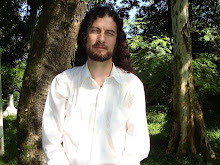
Ion Pacepa
He offers his view as a former KGB agent today under CIA protection.
As soon as his book was published, I acquired it. Before reading it, I had already published some articles on him. But after reading the book, I was surprised at his exceedingly simplistic conclusions.

Jewish Issue and a Supposed Equality Between Nazism and Soviet Marxism

Pacepa says that Nazism and Soviet Marxism were absolutely similar. In fact, there were similar points but as any historian knows and as every Israel-loving Christian knows, the most important issue in the 2nd World War was the Holocaust that Nazis committed against the Jews, annihilating 6 million of them. In this specific issue, was there equality between Nazism and Soviet Marxism?
What History records is that while the Nazi army annihilated the Jews throughout Europe, the Soviet Union’s Red Army consisted of thousands of Jews, who helped annihilate Nazism. While the Gestapo (the Nazi secret police) relentless persecuted the Jews, NKVD, the KGB predecessor, was founded by the Soviet Jew Genrikh Yagoda, considered the greatest Jewish murderer in the 20th century, according to an Israeli newspaper.
So as far as the 2nd World War Jews are concerned, Nazism and Soviet Marxism were in opposed sides: Nazism was a total enemy of the Jews while the Soviet Marxism was a friend. Even though this in no way excuses the atrocities of the Soviet Union, it freed the first Nazi concentration camp and it was the first nation to acknowledge officially at the United Nations the modern State of Israel in 1948.
Hitler’s anti-Jewish hatred found no match in the Soviet Union, but in a powerful U.S. capitalist of his time.
My article “Hitler’s Strident Anti-Marxism,” based on the views of Henry Ford (a capitalist magnate of the automobile industry) and Hitler, brings literal mentions by them and shows that their hatred of the Soviet Marxism was derived from the fact that the Jews had a certain control of the communist revolution in Russia. You can see more information in my article “Jewish Issues: A Clarification to Christians about Their Perception on the Jews.”

Is Liberation Theology a KGB’s Daughter?

In his book Pacepa insists that KGB is the mother of Liberation Theology. But both U.S. and Brazilian Catholics dispute Pacepa. (Brazil is the largest Catholic nation in the world, heavily affected by Liberation Theology.) U.S. Catholic author John L. Allen, of Crux, said:
“Catholic Archbishop Hélder Câmara of Olinda and Recife in Brazil didn’t have to be ‘maneuvered.’ He was already on board with liberation theology before anyone in Moscow knew it was stirring. That’s not to say the KGB didn’t do whatever it could to support leftist movements in Latin America critical of capitalism and the United States. It would be surprising if they hadn’t, given the zero/sum Cold War logic that anything that seemed to hurt one side benefited the other. In that sense, Pacepa is likely correct about the KGB strategy, but may be giving the agency too much credit for its results.”
Helder Camara, who founded the National Conference of Bishops of Brazil and is the patron of the Brazilian Catholic Left, is in process of sainthood in the Vatican.
The Plínio Corrêa de Oliveira Institute, a Brazilian Catholic institution known for its conservative stances, also disputed the exaggerated conclusions in Pacepa’s book, by posting the article titled “Liberation Theology, a KGB Invention? That Is Way Too Simple...
To say, as Pacepa said, that the KGB created Liberation Theology equates saying that CIA created the Pentecostal and charismatic movements, even though some very radical Catholics declare just so. During the Cold War, the KGB supported sectors in the Catholic Church connected to Liberation Theology while CIA supported conservative Pentecostal movements that were opposed to Liberation Theology. See my article “The Religious War between CIA and KGB in Latin America.” I have attended Pentecostal and charismatic churches. Does it mean that I am CIA child? By no means.
Prominent Catholic website National Catholic Register, in an article written by the Catholic journalist Victor Gaetan, rebutted Pacepa and his book by showing that there is disinformative content in his declarations. See the article “Disinformation” and a Dubious Source.
Catholic theologian Malachi Martin shows several Catholic ecclesiastical leaders who, before the KGB’s birth, promoted Liberation Theology.
The big challenge, therefore, is to read Pacepa’s book knowing how to distinguish between what is real and imaginary, filtrating what seems showy and impossible to prove. It is suspicious, for example, the fact that Pacepa is praised by CIA — a praise cheerfully recorded in his book. Opposition to the KGB, for a conservative, does not mean automatic support to CIA. To receive praises from CIA (headed today by a Muslim), or from the KGB, is a disadvantage, making the praised individual worthy of mistrust.

Is Modern Islamic Terror a KGB Creation?

According to information from WND itself, which published originally the Pacepa book, the U.S. government secretly sent many supplies of weapons to Syrian rebels (largely Islamic terrorists connected to al-Qaeda) who have been raping, torturing and slaughtering Christians in Syria. CIA played a major role in this scheme. In fact, WND accuses Hillary Clinton of having helped create ISIS, which has slaughtered thousands of Christians in the Middle East.
Besides, it is known that CIA gave billions of dollars to create al-Qaeda in the late 1970s, in a scheme to strengthen and use Islamic terror to overturn the Soviet Union. But the scheme was turned upside down when one of the CIA Islamic agents, Saudi Osama bin Laden, for some reason rebelled himself against the U.S. CIA and its former agent played a crucial role in the strengthening of the modern Islamic terror. But Pacepa seems to ignore all of this, even though he presents himself as an expert on Islamic terror. He insists in attributing 100 percent blame on the KGB.
Pacepa, who supposedly occupied so prominent post in the KGB that it allowed him to know at length the CIA involvement in the fomentation of the international Islamic terror, in his book he pretends that he has no such knowledge, or he hides it in order to be in the favor and privileges of CIA.
I examined his book “Disinformation” and I did not find any criticism of CIA and no mention of the fact that CIA had and has undeniable participation in the modern Islamic terror. In fact, the current CIA director is a Muslim, having converted to this murderous religion when he was in Saudi Arabia. Even so, to CIA Pacepa has in store only praises; to the KGB, criticism. Why not, for fairness, criticize both?
In “Disinformation,” Pacepa tells that his protection, identity and other personal issues are under CIA responsibility. The introduction of his book was written by James Woolsey, a former CIA director. In this point, some could question if the Pacepa book denounces disinformation or is a tool of disinformation.
By following his own exaggerated conclusions, Pacepa has more than enough reasons to say that the U.S. presidential candidate Donald Trump is a “KGB agent.
In fact, a former CIA director has said just so. He also said that he is going to vote for pro-Islam Hillary Clinton and he praised the fact that since 9/11 the CIA’s Counterterrorism Center was headed by a Muslim for over ten years. The current CIA director is Muslim. Former U.S. President George H.W. Bush, also a former CIA director, said that he is going to vote for Hillary.
If this scandal were connected to KGB, Pacepa would be exposing it and yelling.
Why his silence?
Portuguese version of this article: Ion Mihai Pacepa e desinformação
Recommended Reading:
Sunday, May 24, 2015

Liberation Theology, a KGB Invention? That Is Way Too Simple...


Liberation Theology, a KGB Invention? That Is Way Too Simple...

By Luiz Sérgio Solimeo
Preface by Julio Severo: Recently, a former communist from Romania said that Liberation Theology, which is predominant in Latin America, was exclusively created by the KGB. I do not doubt the KGB’s malevolence, but other voices, especially from Latin America, can shed a better light on this issue. Luiz Sérgio Solimeo is a conservative Catholic Brazilian who has written an insightful article in Portuguese about Liberation Theology, and I have asked him to translate it into English. To further help our understanding, I mention an interesting comment by John L. Allen, of Crux, who said:
Catholic Archbishop Hélder Câmara of Olinda and Recife in Brazil didn’t have to be ‘maneuvered.’ He was already on board with liberation theology before anyone in Moscow knew it was stirring. That’s not to say the KGB didn’t do whatever it could to support leftist movements in Latin America critical of capitalism and the United States. It would be surprising if they hadn’t, given the zero/sum Cold War logic that anything that seemed to hurt one side benefited the other. In that sense, Pacepa is likely correct about the KGB strategy, but may be giving the agency too much credit for its results.
This is true! Long before a supposed official launch of Liberation Theology by the KGB, Archbishop Hélder Câmara promoted this socialist theology, and now the Vatican is taking steps to canonize him. After Oscar Romero, Câmara will be the second official Liberation Theology “saint” in the Catholic Church.
Here is the article by Mr. Solimeo:
Ion Pacepa
Ion Pacepa, a former member of the Romanian secret service who fled to the West in the 70’s, recently gave an interview to the Catholic News Agency narrating how the KGB (Soviet secret service and political police) created Liberation Theology.
“The movement was born in the KGB and had a KGB-invented name: Liberation Theology,” Pacepa says. And he tells how Khrushchev and a Russian general had agents infiltrate the World Council of Churches and maneuvered with the same means a group of South American bishops gathered in Medellin, Colombia, in 1968.

Reality is More Complex

Although one cannot rule out Moscow’s hand in spreading this revolutionary movement, reality is much more complex: Liberation Theology was the fruit of a long process that took place inside Church sectors worked over by Modernism and imanentist modern philosophies, as well as by the influence of liberal Protestantism.
Its origins – not to go further back – can be traced to the pontificates of Popes Leo XIII (1878-1903) and Saint Pius X (1903-1914).

Modernist Heresy

Through various documents and disciplinary measures, Pope Saint Pius X condemned a whole set of philosophical, theological, moral and social errors that were brewing for some time in Church educational institutions. This ensemble which he calls the synthesis of all heresies he named Modernism. It is the Modernist heresy.
Modernism particularly described in the encyclical Pascendi Dominici Greges, of 1907 is a more radical version of Catholic liberalism which strives to infiltrate the spirit and mentality of the world into the Church. Modernism is fundamentally naturalist and imanentist, denying the supernatural and divine transcendence and reducing religion to a mere feeling without dogmatic truths or immutable moral precepts.
Unfortunately, although St. Pius X condemned Modernism, its spirit and many of its doctrines and goals continued to meander in ecclesiastical and lay circles. In 1910, the holy Pontiff issued the Motu Proprio Sacrorum Antistitum, which stated: “Modernists, even after the Encyclical Pascendi dominici gregis unmasked them, did not give up their designs to disturb the peace of the Church. Indeed, they continued to recruit and gather new adherents in a secret society ... [They] are injecting the virus of their doctrine into the veins of Christian society.” [1]

Nouvelle Théologie

Later, in 1950, the theological and philosophical errors disseminated by this modernist secret society were condemned by Pope Pius XII with the encyclical Humani Generis. Among the condemned errors are naturalism and Teilhard de Chardin’s “mystical evolutionism,” which identified Jesus Christ with evolution, making any dogmatic truth or morality taught by the Church meaningless. Thanks to its mentors (mostly French), this current became known as Nouvelle Théologie.

Socio-political and Economic Modernism

In the early 20th century the socio-economic aspect of modernist theological fermentation was represented by Marc Sangnier’s Le Sillon (“the furrow”). This lay movement preached a radical socio-economic egalitarianism and was also condemned by Saint Pius X in 1910 with his Apostolic Letter Notre Charge Apostolique.
This trend was later systematized in philosophical terms by Jacques Maritain, a French philosopher and convert to Catholicism, in his book Integral Humanism (1936) – which Fr. Antonio Messineo, S.J., qualified as “integral naturalism” in an article in the Civiltá Cattolica. [2]
In his book, although Maritain criticizes Communist atheism and totalitarianism, he praises the “profound intuition” of Marx--intuition that Maritain believes “to be the great flash of truth running trough his work.” This “flash of truth,” he explains, is Marx’s thesis of the “alienation imposed in the 'capitalist' world on the work-force, and of the dehumanization with which the owners and the proletariat are thereby simultaneously stricken." And he believes that the role of Catholics is to rescue this Marxist intuition from his atheistic philosophy. Because, he says, "whatever aversion Marx may personally have nourished against Christianity, this intuition itself is pregnant with Judaeo-Christian values.” [3]
With his book, Maritain opened the way for collaboration between Catholics and Communists, since he accept not only as true, but even as Christian, the essence of Marxist’s social and economic theory. Most of all, he destroyed the foundations of the Catholic anticommunism and suggested a “third way” or “third position.”
Above all, Maritain’s book destroyed the vigor of Catholic anti-communists, increasingly leading Catholic Action and Christian Democrats toward the left.
Incidentally, during his stay in the United States, Maritain became a close friend and ally of the notorious communist agitator Saul Alinsky. [4]  
Especially in Latin America, this work became the “handbook” of the Catholic Action movement and its political arm, the Christian Democratic parties.

The “Third Position”: “No Enemies on the Left, No Friends on the Right”

The First Conference of Christian Democracy in America was held in Montevideo, Uruguay, in 1947 with the aim of promoting Maritain’s “Third Position.” The gathering’s final statement said Christian Democracy was based on Church social doctrine and on Maritain’s “Integral Humanism.” The document criticized Fascism, communism and capitalism. But it showed distaste for anticommunism, seen as a “sower of discord.” In short, consistent with the formula “Pas d’ennemis à gauche, pas d’amis à droite” (no enemies on the left, no friends on the right), the “Third Position” (neither capitalist nor communist) turned out to be especially anti-anticommunist.

From Catholic Action to Communist Guerrilla Warfare

With the death of Pope Pius XII (October 1958), the Christian Democrats in Italy and elsewhere began the so-called “opening to the left,” allying with socialist parties and speaking about “Christian socialism.”
In Brazil, for example, the youth of Catholic Action (who were also the grassroots of Christian Democracy) went even further and in 1960 allied themselves with communists in the student movement. This alliance went so far that in 1962 they broke away from the Church and formed a socialist political movement, the People's Action. And by the end of that decade, this movement led formerly Catholic young people to join communist urban guerrillas.

Liberation Theology’s Culture Medium

Theories of Nouvelle Théologie and Maritain’s political philosophy also penetrated seminaries throughout the world, influencing young priests and religious. In Brazil in 1969, three Dominican novices, former members of the Youth of Catholic Action, were arrested by the police for links with communist guerrillas.
It was in this ambience of intensely modernist and leftist fermentation that theologians such as Uruguayan Juan Luis Segundo, SJ, Brazilians Hugo Assmann and Leonardo Boff, OFM, and Peruvian Gustavo Gutierrez laid the foundation of the Liberation Theology. Because of Peronist (Juan Domingos Peron, 1895-1974) influence, in Argentina this “theology” had a more populist character and was led by Frs. Juan Carlos Scannone, SJ, and Lucio Gera.

A Latin American “Theology”?

Although Liberation Theology is said to be a Latin American “theology,” in fact it is grounded in Catholic and Protestant European authors and in the communist theoreticians, Karl Marx and Antonio Gramsci.
Deification of the “poor,” as Marx did with the “proletariat,” which he presented as the “redeemer” of humanity, is the central point of this “theology.”
Liberation theology is not meant to help the poor, as the great saints of the Church have always done, but only to use them. Consistent with the Marxist theory of class struggle the poor are but a weapon used against the “rich.”
Nor is Liberation Theology intended to improve the economic situation in countries where it operates. Rather, it leads to misery, which these pseudo-theologians identify with “evangelical perfection.” Their model is Cuba, idolized as a kind of “earthly paradise,” where misery takes on, as it were, a “sacred” character. It is clear from testimony by Leonardo Boff and Clodovis Boff that they follow “miserabilist” heresies from the decadent Middle Ages: “Also inspirational to liberation theology are the singular evangelical experiences of so many hereticized prophets ... without forgetting the precious contribution of medieval pauperist reform movements and the evangelical postulations of the great reformers.” [5]
From this quick historical overview one sees that, with or without the KGB, the internal crisis raging in the Church for so long would logically have led to liberation theology.

“Unperceived Ideological Transshipment”

The KGB has possibly contributed in spreading this political-religious ideology which is presented as Catholic theology because it is a very useful means of communist expansion, especially in Catholic circles, and for maintaining Communist regimes in the unfortunate countries that suffer under its rule.
However, the decisive factor in the emergence and proliferation of Liberation Theology, and its practical application in Latin America has been the real “unperceived ideological transshipment” to use the famous expression coined by Prof. Plinio Corrêa de Oliveira [6]   suffered by young Catholic idealists who entered seminaries or joined Catholic Action and were gradually led away from religious fervor and Catholic orthodoxy toward affinity with the Marxist theories of egalitarianism and class struggle.
Therefore, communism and the KGB are not found in the beginning of the process that led to the emergence of Liberation Theology, but rather at its end, as a necessary consequence of adhering to egalitarian and evolutionary principles of heretical theoreticians from the early twentieth century.
Notes:
[1] http://w2.vatican.va/content/pius-x/la/motu_proprio/documents/hf_p-x_motu-proprio_19100901_sacrorum-antistitum.html.
[2] Antonio Messineo, S.J, “Umanesimo Integrale”, Civilta Cattolica, Sept. 1, 1956.
[3] Jacques Maritain, Integral Humanism, Freedom in the Modern World, and A Letter on Independence, University of Notre Dame press, Notre Dame, Indiana, 1996, p. 181 and note 8.
[4] Cf. Sanford D. Horwitt, Let Them Call Me Rebel – Saul Alinsky His Life and Legacy, Alfred A. Knopt, New Yor, 1989, pp. 167, 177, 191, 197, 369, and 484.
[5] Leonardo Boff and Clodovis Boff, Como Fazer Teologia da Libertação, Vozes, Petrópolis, 1986, p. 57.
[6] Cf. Unperceived Ideological Transshipment, at http://www.tfp.org/tfp-home/books/unperceived-ideological-transshipment-and-dialogue.html.
Recommended Reading: