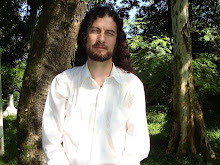
Showing posts with label René Padilla. Show all posts

Wednesday, March 08, 2017

Socialist Theology in the Assemblies of God in Brazil


Socialist Theology in the Assemblies of God in Brazil

By Julio Severo
Socialist evangelicals in Latin America have become revolted that C. René Padilla, who was scheduled to deliver the main lecture on Theology of Integral Mission at FAECAD (Assemblies of God Evangelical School in Rio de Janeiro, Brazil) in March 10, 2017, had his lecture cancelled. His lecture would be sponsored by World Vision Brazil.
In an article titled “Welcome to the Past! In Solidarity to Dr. C. René Padilla, Now Nicknamed a ‘Marxist Christian,’” published by the left-wing Latin American Theological Fellowship, Harold Segura decried the cancellation and assured that the Theology of Integral Mission has nothing to do with Marxism.
His article purports, according to his own words,
“To express that I am uncomfortable with the cancellation of the lecture and my uneasiness with the reasons that justified it. To cancel such lecture by labeling as Marxist a lecturer as Padilla is to ignore what Marxism is, is to ignore who René Padilla is and forget the way a theological reflection is done.”
Segura also said,
“I think that what happened in Rio de Janeiro is a sign confirming what we are seeing also in other Latin American nations: a resurgence of past discussions. The return of old Christian squabbles of the 1970s and 1980s, when TIM appeared. In that time, those daring to talk about social responsibility in the churches were labeled communists; those venturing to preach in defense of social justice were under suspicion of Marxist militancy, and those believing in preferential option for the poor were excluded for being undesirable liberation theologians.”
In his Twitter account, Segura showed solidarity to Padilla and also to the gender ideology, by saying,
“Do you know what is gender equality? UNESCO explains key concepts for discussing in a very informed way.”
Actually, UNESCO does not explain gender equality. UNESCO advocates and promotes it. In 2012, UNESCO and other UN agencies asked Brazilian president to criminalize “homophobia.”
The gender ideology is one of the main left-wing banners promoting the homosexualist agenda. But Segura does not accept the label “Marxist” even when he carries its banner.
He decries the defeat of several left-wing governments in Latin America, and he recognizes that most these governments were promoting the gender ideology. He recognizes that Socialist President Dilma Rousseff was impeached especially by the Evangelical Parliamentary Caucus, among several reasons, over the gender ideology.
He sees these defeats as throwbacks to the Theology of Integral Mission (TIM). While he tries to defend TIM as a non-political theology, he cannot help lamenting over the political defeats of the Left in Latin America.
About 50 years ago, C. Peter Wagner warned in Latin American evangelical congresses that TIM was Marxist. In 1969, when participating in CLADE (Latin-American Congress of Evangelization), Wagner distributed his book that affirmed that the mission of the church is to prioritize personal salvation and warned of the dangers of leftist theology. He gave his book because evangelical leaders were beginning to praise TIM.
In the 1st Lausanne Congress on World Evangelization in 1974, while Padilla was leading efforts to promote TIM, Wagner was leading conservative efforts against TIM.
Nevertheless all resistance decades ago, TIM grew internationally. Today, thanks to John Stott and his incredible work of make-up and enabling, TIM dominates Lausanne as an elegant social theology. Wagner’s resistance has been forgotten and TIM Latin American theologians have prevailed.
In 2014, Lausanne paid Wagner’s resistance back in the same coin, by holding in Brazil a meeting of Lausanne leaders against Wagner and his apostolic movement. The meeting was led by TIM leaders, especially Rev. Valdir Steuernagel.
In my 2013 e-book “Theology of Liberation vs. Theology of Prosperity,” there is a special endorsement by C. Peter Wagner, where he said,
“It is very important to be aware of the inroads that Marxist ideology has made into some branches of Christianity. In Latin America the nice-sounding concept of misión integral (integral mission) has turned out to be a thinly-disguised platform for leftist politics. Julio Severo understands this and he skillfully exposes these potentially harmful ideas in his book, Theology of Liberation vs. Theology of Prosperity. In it he helps bring forth the reality that even deeper and more permanent social change from poverty to prosperity can be effectively produced by proclaiming and practicing the biblical doctrine of the kingdom, opening the door for the transforming power of the Holy Spirit. This is a book that I highly recommend!”
For information on how to get the e-book “Theology of Liberation vs. Theology of Prosperity,” click ON THIS LINK.
Wagner’s warnings 50 years ago and today are very important. If TIM has nothing to do with Marxism, why do its adherents defend the gender ideology and the left-wing governments in Latin America that promote this ideology and several other anti-family ideologies?
Padilla’s lecture on Theology of Integral Mission at FAECAD was publicized within its institution in a very subtle and discreet way.
By the explosive reaction of TIM adherents, I suppose the lecture was cancelled.
Marcos Habib, a Brazilian who introduces himself in his Facebook as a “follower of Jesus Christ” and “communist militant,” said,
“There is again the litany of conservative ministers against the lecture at FAECAD (Assemblies of God Evangelical School) with René Padilla. Shi***ng boring people. They do not know the Theology of Integral Mission, but they criticize it as if they did it. What these people really want is to control church-goers. When there are church-goers engaged, there is a church fighting for the emancipation of the oppressed and the poor. Who is Julio Severo??? A talker, spoilt and a sh**.”
Rev. Mateus Feliciano, a theologian and TIM advocate, sent me a private message asking me to remove articles against TIM and Padilla; if not, he would report me. And in his Facebook account he asked publicly,
“Gang, I ask your assistance to remove a post of religious intolerance and deceptive information here in Facebook. Please, read this post and report!”
Religious intolerance because of a Christian view disagreeing with socialism and TIM?
Yet, my warning probably came too late. In his article of solidarity to Padilla, Harold Segura assured that in February 2016 he delivered the main lecture at FAECAD. He spoke about the Theology of Integral Mission and ecumenism.
I had thought that Padilla would be introducing TIM for the first time in the Assemblies of God. Segura has already done it. Padilla would only reinforce the initial introduction. TIM is already present in the Assemblies of God in Brazil through their most important theological institution.
Segura informed his readers that he is travelling to São Paulo, Brazil, to speak at the congress Integral Mission: Ways and Perspectives in the 21st Century. The congress is happening this week.
According to Segura, this major TIM congress will be sponsored by World Vision Brazil, and will have several speakers who are TIM advocates, including René Padilla, Ariovaldo Ramos, Ed René Kivitz, Valdir Steuernagel (whom he called a friend and former director), Christian Gillis, Carlos Pinheiro Queiroz, Ziel Machado and Regina Sánchez.
Ariovaldo Ramos, one of the main TIM advocates in Brazil, is famous for having defended socialists Hugo Chavez and Dilma Rousseff. Why then try to say that TIM has nothing to do with socialism and politics?
TIM adherents praise Marxists and advocate Marxist politics, including the gender ideology, but do they refuse the label “Marxist” for their theology?
Valdir Steuernagel is a powerful leader in the Evangelical Church of Lutheran Confession in Brazil (ECLCB).
ECLCB has international liberal leaders. Rev. Walter Altmann, a former ECLCB president, is the moderator of the World Council of Churches and he is an international theologian renowned for defending Liberation Theology (LT).
Steuernagel is known in Brazil as a TIM activist and internationally known for his leadership roles in the Lausanne Movement and in the World Evangelical Alliance.
From this pro-LT and pro-TIM liberal environment, what can result? A homosexualist theologian called Andre Musskopf.
With Altmann, ECLCB is in the Liberation Theology forefront.
With Steuernagel, ECLCB is in the Theology of Integral Mission forefront.
Of course, Steuernagel is not more prominent in TIM advocacy than Calvinist Ariovaldo Ramos and Caio Fábio.
TIM has no problem to walk hand in hand with Liberation Theology and Gay Theology.
Yet, if you cannot call TIM and its adherents socialist and liberal, so it follows that you cannot call ECLCB and its leaders liberal and socialist.
If Segura, Padilla and other liberal evangelicals want to defend the gender ideology at ECLCB and other liberal denominations, they will be warmly welcome there.
Yet, why do they insist in conquering the Assemblies of God, the largest evangelical denomination in Brazil?
Portuguese version of this article: Teologia socialista na Assembleia de Deus no Brasil
Recommended Reading:

Wednesday, June 01, 2016

Do Not Be an Enabler of Evil! Lessons from Lausanne


Do Not Be an Enabler of Evil! Lessons from Lausanne

By Julio Severo
In the first Lausanne Congress on World Evangelization in 1974, idealized and supported by Billy Graham, left-wing theologians from Latin America, especially René Padilla, took advantage to bring the Theology of Integral Mission (TIM), which is the Protestant version of Liberation Theology.
In his capacity of Lausanne moderator, John Stott, who is passionately praised by Latin American advocates of TIM, adorned this Marxist theology, by applying face powder and lipstick. So, fully charming and transformed, TIM was launched internationally, by using Lausanne as a platform, even though under a fierce conservative resistance led by Peter Wagner.
Wagner, who is the main leader in the global apostolic movement, fought TIM not only in Lausanne, but also in the first Padilla congresses in Latin America, years before Lausanne. Wagner was the first theologian to make resistance to TIM in Latin America.
Nevertheless all resistance decades ago, TIM grew internationally. Today, thanks to Stott and his incredible work of make-up and enabling, TIM dominates Lausanne as an elegant social theology. Wagner’s resistance has been forgotten and TIM Latin American theologians have prevailed.
In 2014, Lausanne paid Wagner’s resistance back in the same coin, by holding in Brazil a meeting of Lausanne leaders against Wagner and his apostolic movement. The meeting was led by TIM leaders, especially Rev. Valdir Steuernagel.
After the first and second Lausanne congresses, Billy Graham realized that the TIM Latin American advocates used Lausanne as a platform. So he stopped funding the event. But it was too late. The damage was already done.
Wanting or not, by adorning TIM in Lausanne, John Stott enabled the expansion of this evil in the Global Evangelical Church.
Portuguese version of this article: Não seja um facilitador do mal! Lições de Lausanne
Recommended Reading:

Monday, June 22, 2015

Karl Marx’s Spirit in Lausanne: Theology of Integral Mission


Karl Marx’s Spirit in Lausanne: Theology of Integral Mission

René Padilla: Lausanne upheld Theology of Integral Mission as the mission of the church

By Julio Severo
Karl Marx was in Lausanne in 1867, for an international Marxist congress.
One century later, another international congress drew attention in Lausanne. It was not a Marxist congress. It was an evangelical congress on evangelization. Yet, it gave a fantastic spotlight for Latin American proponents of TIM (Theology of Integral Mission), which, according to its Brazilian proponents, is the Protestant version of the Marxist Liberation Theology. One of them is Ariovaldo Ramos, who has praised Hugo Chavez. Ramos is the director of the Brazilian branch of World Vision.
It was the Lausanne Congress on World Evangelization,1974, where one of its theologians, René Padilla, was one of the most prominent TIM advocates in Latin America.
So Karl Marx was present also, spiritually, at the Lausanne congress, through his ideology, which was receiving evangelical clothes.
Beautiful clothes disguise an ugly and deceptive ideology.
So there is an effort by TIM proponents to hijack the purpose of major evangelical conferences by exploiting any statement resembling TIM’s socialist feelings. In his paper “Integral Mission and its Historical Development,” Padilla made his case for TIM by listing a number of previous evangelical conferences as allegedly supporting it.
I will use Padilla’s paper as reference to address TIM in Lausanne.
Regarding the Congress on the World Mission of the Church (Wheaton 1966), Padilla said:
The Wheaton Declaration confessed the ‘failure to apply scriptural principles to such problems as racism, war, population explosion, poverty, family disintegration, social revolution, and communism.’”
“Population explosion” was a common subject and obsession among Western elites in the 1960s and 1970s and it should have been addressed by responsible and capable Christian leaders not according to elites’ wishes, which led to abortion legalization in the U.S., the largest Protestant nation in the world, and later radical societal homosexualization. “Population explosion” is a myth and rhetorical strategy that disguise population control efforts that include family planning and are responsible today for the deluge of “homosexual rights” to the detriment of rights and well-being of children and their families. If this myth had been debunked by Christian leaders in that time, it could have averted abortion legalization in the United States, which happened in 1973, with a massive toll today of over 50 million innocent unborn victims.
Concerning social revolution and communism, whatever interpretation Padilla might try to give, it is obvious that TIM, in its Latin American practice, was never a foe for him and his liberal theological colleagues.
Padilla wonders on Wheaton 1966:
“How such a document could come out of a mission conference held in the United States at a time when evangelicalism in that country was simply not interested in social change or social activism.”
Yet, a socialist gospel was not a strange reality in America. Apparently, Padilla is ignorant of the Social Gospel movement, which was born in America in the 1870s. Socialism in the American society and among its churches was a so serious threat that “The Fundamentals,” a theological paper organized by R.A. Torrey and published in 1915, had a whole chapter against Marxism and socialism.
Socialism, disguised as an interest in social change or social activism, is an old problem in the American churches.
The old Social Gospel movement dispels the myth that the U.S. evangelicalism had not been involved in “social change or social activism.” And there are significant signs that the most important theological liberalism in Latin America was influenced by it.
Theology of Integral Mission, or even Liberation Theology, may be the Social Gospel’s most important offshoot.
A Presbyterian missionary from the Social Gospel movement came to Brazil in 1952 and spent one decade teaching theology in the most prominent Presbyterian theological institution in Brazil. His name was Rev. Richard Shaull, and he was involved in several Marxist and communist causes in Brazil. The birth of the Theology of Integral Mission (TIM) ideas in Brazil is traced and credited to him.
In the 1950s he already said what Liberation Theology and TIM proponents would be saying in the 1980s and 1990s and decades to come. Shaull’s disciple Rubem Alves, initially a theologian in the Presbyterian Church of Brazil and later an agnostic, advocated Liberation Theology ideas before its official launch.
Even though TIM is labeled as the Protestant version of Liberation Theology, TIM was born before Liberation Theology. For more information, download my free e-book here: http://bit.ly/15AJmMC
Padilla tried give TIM a nobler birth by using major evangelical conferences, including the World Congress on Evangelism (Berlin 1966), as alleged precursors.
In his opening address at the Berlin Conference, Billy Graham reaffirmed his conviction that “if the church went back to its main task of proclaiming the Gospel and people converted to Christ, it would have a far greater impact on the social, moral, and psychological needs of men than it could achieve through any other thing it could possibly do.”
Nevertheless, Padilla used this conference as a major TIM precursor. He said,
“With all these antecedents, no one should have been surprised that the International Congress on World Evangelization (Lausanne 1974) would turn out to be a definitive step in affirming integral mission as the mission of the church. In view of the deep mark that it left in the life and mission of the evangelical movement around the world, the Lausanne Congress may be regarded as the most important worldwide evangelical gathering of the twentieth century.”
For Padilla, Lausanne established Theology of Integral Mission as the mission of the church. So, with TIM at Lausanne, socialism became the mission of the church.
Because of the leftist influence of Padilla and other Latin American theologians,the Lausanne Covenant said, “we affirm that evangelism and socio-political involvement are both part of our Christian duty.” The Lausanne Covenant basically equaled evangelism with leftist political action, a profane union never done by the Gospel or Jesus.
The central personality in the 1st Lausanne Congress was Billy Graham. Without him, there would have been no Lausanne, but even he did not expect repercussion on an ideological level. When Graham perceived that the Protestant Left was trying to co-opt everything, he stopped funding Lausanne, and it displeased Brazilian Marxist Anglican Bishop Robinson Cavalcanti, an old columnist of the Brazilian leftist Presbyterian magazine Ultimato, who openly accused that Lausanne was under a “hegemony from a conservative, white, anti-WCC (World Council of Churches) and anti-socialist group,” etc. (Poor Graham: white, Anglo-Saxon, conservative, etc!)
Cavalcanti wanted Graham to continue in the Lausanne movement to raise funds to advance a TIM revolution. This revolution has been happening, but without Graham’s money and participation. Valdir Steuernagel, a TIM leader, has said that today Lausanne is much more TIM than ever. It is not, therefore, a movement with the Gospel’s face, but with the face of an ideology masking itself as the Gospel.
Padilla remarked on the results he helped to produce in this TIM covenant by saying, “The Lausanne Covenant not only expressed penitence for the neglect of social action, but it also acknowledged that socio-political involvement was, together with evangelism, an essential aspect of the Christian mission. In so doing it gave a death blow on attempts to reduce mission to the multiplication of Christians and churches through evangelism.”
Yet, “social action” and “socio-political involvement” as “an essential aspect of the Christian mission” have never been, in view of Padilla and other TIM adherents, conservative activism. They have always been socialist activism.
Padilla stresses the same point when he says:
“If both evangelism and social action are so intimately related that their partnership is ‘in reality, a marriage,’ it is obvious that the primacy of evangelism does not mean that evangelism should always and everywhere be considered more important than its partner. If that were the case, something would be wrong with the marriage!… Concept of mission as a marriage in which the two partners – word and action – are ‘equal but separable.’”
So for Padilla, social action — in truth, socialist action — is as important as the Gospel is. This is a profane union that Jesus and his apostles never preached or knew it.
Padilla tries to make TIM opponents look like upper-class evangelicals in North America opposing poor Latin American ministers who have embraced a theology to help the poor. He said:
“In spite of its opponents, most of them identified with the North American missionary establishment, integral mission continued to find support among evangelicals, especially in the Two-Thirds World.”
Yet, he did not inform his readers that TIM preachers in Latin America are equally upper-middle class Lutherans, Presbyterians and Baptists, often graduated in European and U.S. universities, who clash with usually poor charismatic, Pentecostal and neo-Pentecostal preachers who help the poor in their own poor communities, but without TIM. They help the poor by preaching the Gospel without socialism. They encourage their audiences to seek prosperity, healing, health and salvation from God. They pray for the sick and expel demons. This is a Gospel massively unknown by TIM adherents.
So there are clashes between them. When the Lausanne Movement met in Brazil in 2014 to discuss Pentecostal and neo-Pentecostal “problems,” the leader of the meeting was Rev. Steuernagel, a non-charismatic minister.
Because Padilla has no Bible support for uniting the Gospel with leftist political action, he has to use major evangelical conferences and their ambivalent or vague language or even Lausanne, whose language had his active participation.
Besides, intentionally or not, Padilla overlooked conservative opposition in Lausanne to his efforts to make Lausanne more leftist. The leader of this opposition was C. Peter Wagner, who was a missionary in Latin America and knew very well the TIM advocates. He accused TIM of being left-wing.
Also, Padilla never mentioned that in Lausanne evangelical leaders from Latin America are not representative of the explosive Pentecostalism in that region. For example, Rev. Valdir Steurnagel, a Lausanne Movement leader today, is a minister in the Evangelical Church of Lutheran Confession in the Brazil (ECLCB). A former president of this Lutheran denomination, Walter Altmann, is a World Council of Churches moderator and an active Liberation Theology proponent. Many others in this denomination are prominent advocates of Liberation Theology and TIM. The largest ECLCB theological institution in Brazil has a theology professor, Rev. André Sidnei Musskopf, who is not only openly homosexual, but an active homosexual militant and author.
Hardcore Marxist Liberation Theology in ECLCB makes TIM look like, in it “softcore” socialism, “conservative” or even “right-wing”!  Yet, as the example of Rev. Musskopf shows, both theologies facilitate the acceptance and expansion of gay theology.
Steuernagel’s upper class status and his higher theological experiences in no way reflect the experience of the predominant Pentecostal and neo-Pentecostal churches in Brazil, whose congregations often are composed by members poorer than the Lutheran congregations, which usually are middle class and higher. ECLCB, which has embraced Liberation Theology and TIM, is no representative of the Evangelical Church profile in Brazil.
Padilla also recognizes Steuernagel’s influence in Lausanne by saying:
“But the lack of adequate attention to the question of justice during the Congress was clearly articulated by Valdir Steuernagel from Brazil in a ten minute speech that he was allowed to give to the plenary at the very end of the Congress.”
Similarly, other Brazilian theologians do not speak for the Brazilian Church when they talk about her to First World audiences and international evangelical conferences.
Paul Freston, a naturalized Brazilian who has books published in English about the Brazilian Church, has a story of socialist involvements in Brazil and he is a key figure in TIM events in Brazil.
Another TIM proponent is Rev. Alexandre Brasil, a Brazilian Presbyterian minister who has delivered speeches in Calvinist institution in the U.S. about the situation of the Evangelical Church in Brazil. Rev. Brasil has kept a high-paid job as a consultant for the Brazilian presidency in the current socialist administration.
All of them are upper class Brazilians addressing poverty issues largely not experienced by their Protestant segment, but by Pentecostal and neo-Pentecostal segments.
Nevertheless, Lausanne has been a platform for these not poor theologians to promote their Marxist ideas in the name of the Gospel — which has already abundant assistance for the poor, without socialism.
If spiritual curses can affect spiritually sick Christians, could the Marxist meeting of Karl Marx in Lausanne in 1867 and its dark spiritual influences have affected an evangelical meeting 100 years later?
The responsibility of a Christian is to preach the Gospel to every creature, including Marxists, socialists and communists. To inoculate the Gospel with Marxism, communism or socialism is not God’s plan.
To preach socialism masked as a “Christian” social responsibility or as “married” to the Gospel to every Christian is not what Jesus commanded. He commanded Christians to preach the Gospel of the Kingdom of God and heal de sick and expel demons — presumably, even demonic ideologies among Christians. Sign and wonders, or healing and demon expelling, are married to the original and first Gospel.
If given the opportunity, the Holy Spirit could have manifested himself in Lausanne and other similar evangelical conferences. Instead, Karl Marx’s spirit made its Protestant manifestations in Lausanne, which, according to Padilla, established TIM as “the mission of the church,” leading evangelicals to embrace and help an ideology that makes the State replace the Gospel in the capacity to help the poor, heal the sick and expel demons through its social services, funded not by the pockets of its political rulers, but by the pockets of its exploited citizens.
Why does no one dare to call TIM another gospel and another spirit?
Recommended Reading: